The revelation of the Industrial revolution in the late 18th and early 19th century was a defining point not only in the progression of the profession of planning but highlighted a shift in lifestyle for most western cultures. The result of such a shift was the emergence of large scale factories dominating inner city suburbs which consequently lead to the mass influx of immigrants and rural dwellers into the city creating instant problems of overcrowding housing, poor health, poverty and the emergence of the iconic inner city working class slums.

To combat industrial urbanism movements such as the Parks Movement lead by Frederick Law Olmsted and the Garden City movement lead by Ebenezer Howard were introduced in the late 18th and early 19th centuries to provide the congested cities with “lungs”. This notion lead to the development of mass amounts of parkland, tree lined boulevards and open space in inner cities to provide healthy outlets for the cities poor and Central Park in New York is a key successful example of these initiatives.

In the 1890’s however the trend shifted as the City Beautiful movement lead by Daniel Burnham took over with focus on the structural aesthetics of the city taking priority over parklands with grand buildings and designs a sign of wealth and prosperity as seen in Chicago’s transformation in 1893.
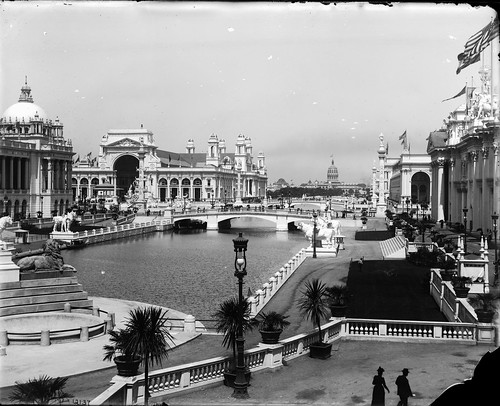
The next major two shifts in early planning showed similarities to modern day planning and evolved out of the emergence of reliable transportation which allowed residents to sprawl away from inner cities regions and live in small cities yet still within the region. This idea by Lewis Mumford allowed for the modernism of Le Corbusier who proposed and implemented the use of skyscrapers to save space and deal with the booming post war populations.

All these initiatives which have occurred between 1870 - 1940 have shaped the planning profession and urban life as we know it and the fact that these major shifts happened during two world wars and a depression is a monument to the early planners of the century

Nice visuals to accompany the evolutionary phases of urban development and planning approaches.
ReplyDeleteI agree with your conclusion. The fact that planning developed so comprehensively during this period (especially when the world wars and recession were happening) is amazing. It demonstrates the emotionally and politically driven initiative of people in a time of serious need, to move onwards and upwards.
ReplyDeleteOh and nice pics also.